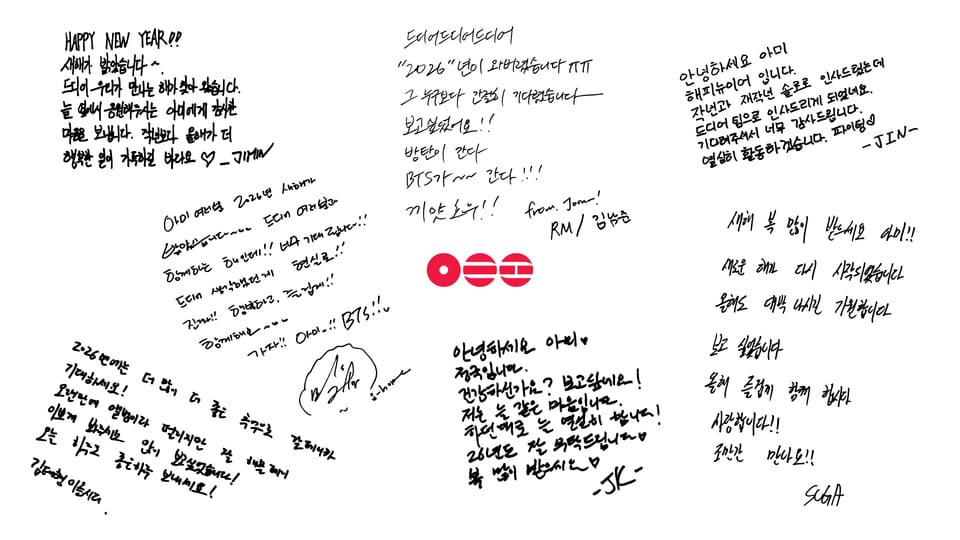
RM's 12/1 IG STORY
RM's philosophical drop on IG re: art, existence, pain, and numbness...
My commentary in green
Original Korean in black.The text in bold italics (except when citing titles) are the parts RM underlined.
Translation in purple
Excerpt from The palliative society by Byung-Chul Han or 고통의 사회

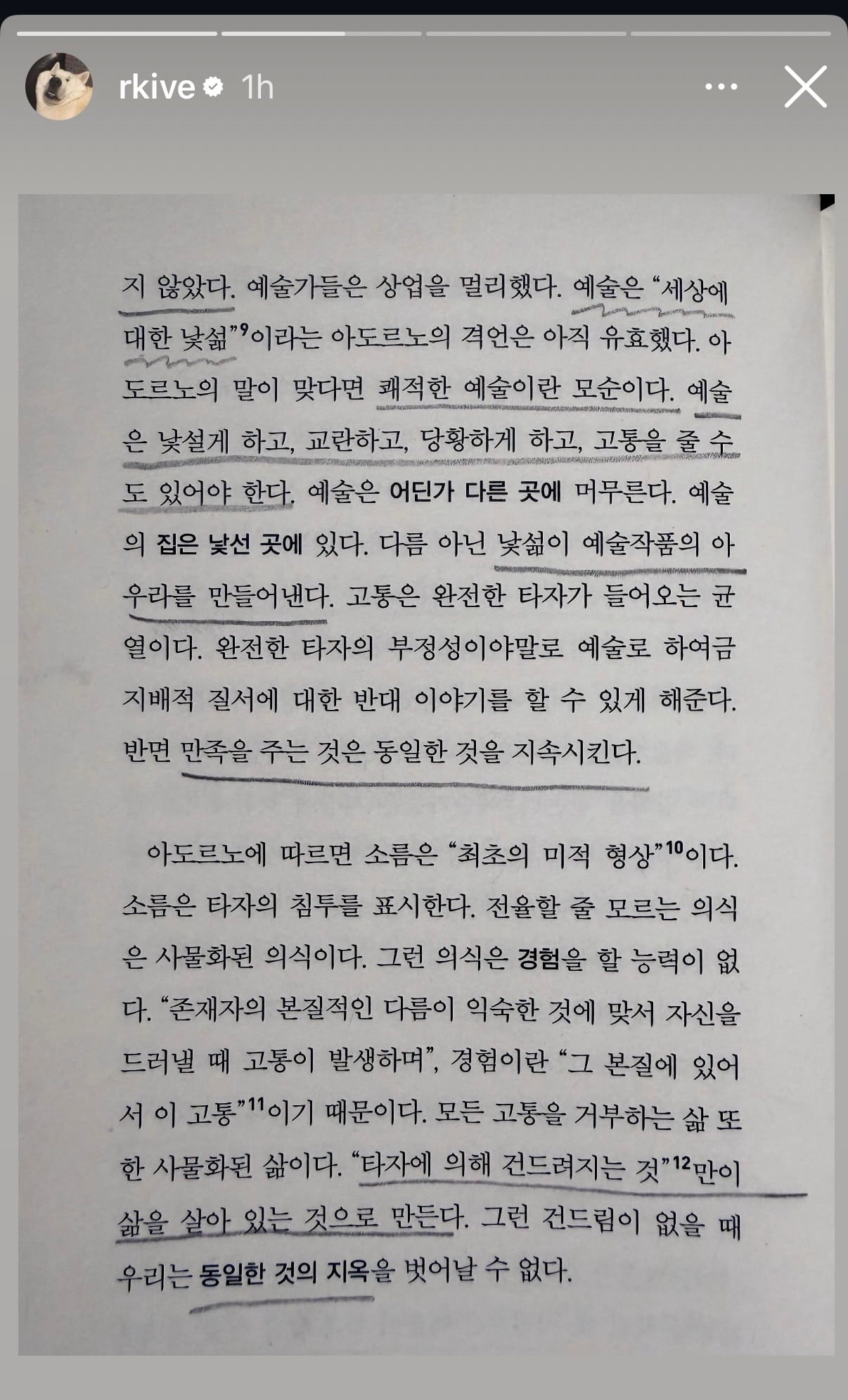 ...지 않았다.
...did not.
예술가들은 상업을 멀리했다. 예술은 “세상에 대한 낯섦”이라는 아도르노의 격언은 아직 유효했다.
Artists distanced themselves from commerce. Adorno's dictum that "art is estrangement from the world" was still valid.
아도르노의 말이 맞다면 쾌적한 예술이란 모순이다.
If Adorno is right, comfortable art is a contradiction.
예술은 낯설게 하고, 교란하고, 당황하게 하고, 고통을 줄 수도 있어야 한다.
Art must be able to estrange, to disturb/disrupt, to unsettle/embarrass, and even to inflict pain.
예술은 어딘가 다른 곳에 머무른다.
Art resides somewhere else/in another place.
예술의 집은 낯선 곳에 있다.
The home of art is in the unfamiliar.
다름 아닌 낯섦이 예술작품의 아우라를 만들어낸다.
It is precisely unfamiliarity that creates the aura of the artwork.
고통은 완전한 타자가 들어오는 균열이다.
Pain is the crack through which the Other enters.
"the Other" in the philosophical sense - so not just "the other guy over there" but the ones radically othered, something that cannot be absorbed into sameness.
Part of the reason this translation took me longer is because, as is true for literature in English, philosophical texts often blow my mind and require ALL of my 3 braincells to work SO hard to hold each word, each sentence together to understand the author's intended spirit/meaning/heart as they're trying to unpack, usually very lofty/abstract concepts through their own interpretations.
For a little bit of background, I have a masters in ethics which necessarily includes A LOT OF reading of philosophers and ethicists which, yes, blew my brain apart [in really important and good ways] many many times over
I want to do justice not only to the sillypants nuanced translations - but as best I can - especially for those learning Korean (and myself!) to all the different kinds of art/creation that BTS might introduce to us. So thank you for reading and for your patience! okay..onward..
완전한 타자의 부정성임야말로 예술로 하여금 지배적 질서에 대한 반대 이야기를 할 수 있게 해준다.
It is precisely the negativity (or inherent resisting quality) of the Other that enables art to offer a counter-narrative to the dominant order.
반면 만족을 주는 것은 동일한 것을 지속시킨다.
By contrast, what merely provides satisfaction perpetuates sameness.
아도르노에 따르면 소름은 “최초의 미적 형상”이다.
According to Adorno, *goosebumps are the "first aesthetic form."
소름 (soreum)= goosebumps/chills; sometimes Koreans just say "소름" to each other when they're really astounded, surprised, utterly delighted, or scared by something beautiful or profound or horrifying and like point to their arms to show the goosebumps
소름은 타자의 침투를 표시한다.
Goosebumps indicate the penetration of the Other.
That is the literal translation but perhaps more accurately, "goosebumps" (literal goosebumps) are evidence of 'the Other' being keenly perceived/piercing through the sameness to you
전율할 줄 모르는 의식은 사물화된 의식이다.
A consciousness that cannot shudder/shiver/tremble is a reified/materialized consciousness.
Reified = 사물화된 = to make something into a thing/object; to treat something abstract as a concrete thing
For example, a wedding ring (concrete thing) may be considered the reification of a couple's eternal love and commitment to one another (abstract); a company may reify the concept of 'sustainability' (abstract) through a list of concrete actions/practices that promote it; whole complex groups of people can be reified - and consequently rather reduced- into mere data points (concrete)
Here, the author is asserting that a consciousness that is entirely unmoved by something that would normally cause one to tremble/shudder/shiver is a consciousness that no longer holds the dynamism of life and has become a 'concrete thing'
그런 의식은 경험을 할 능력이 없다.
Such a consciousness lacks the capacity for experience.
“존재자의 본질적인 다름이 익숙한 것에 맞서 자신을 드러낼 때 고통이 발생하며,” 경험이란 “그 본질에 있어서 이 고통”이기 때문이다.
"When the essential otherness of being reveals itself against the familiar, pain arises," because experience, in its essence, is this pain.
모든 고통을 거부하는 삶 또한 사물화된 삶이다.
A life that rejects all pain is also a reified life.
“타자에 의해 건드려지는 것”만이 삶을 살아 있는 것으로 만든다.
Only "being touched by the Other" makes life truly alive.
그런 건드림이 없을 때 우리는 동일한 것의 지옥을 벗어날 수 없다.
Without such touch, we cannot escape the hell of sameness.
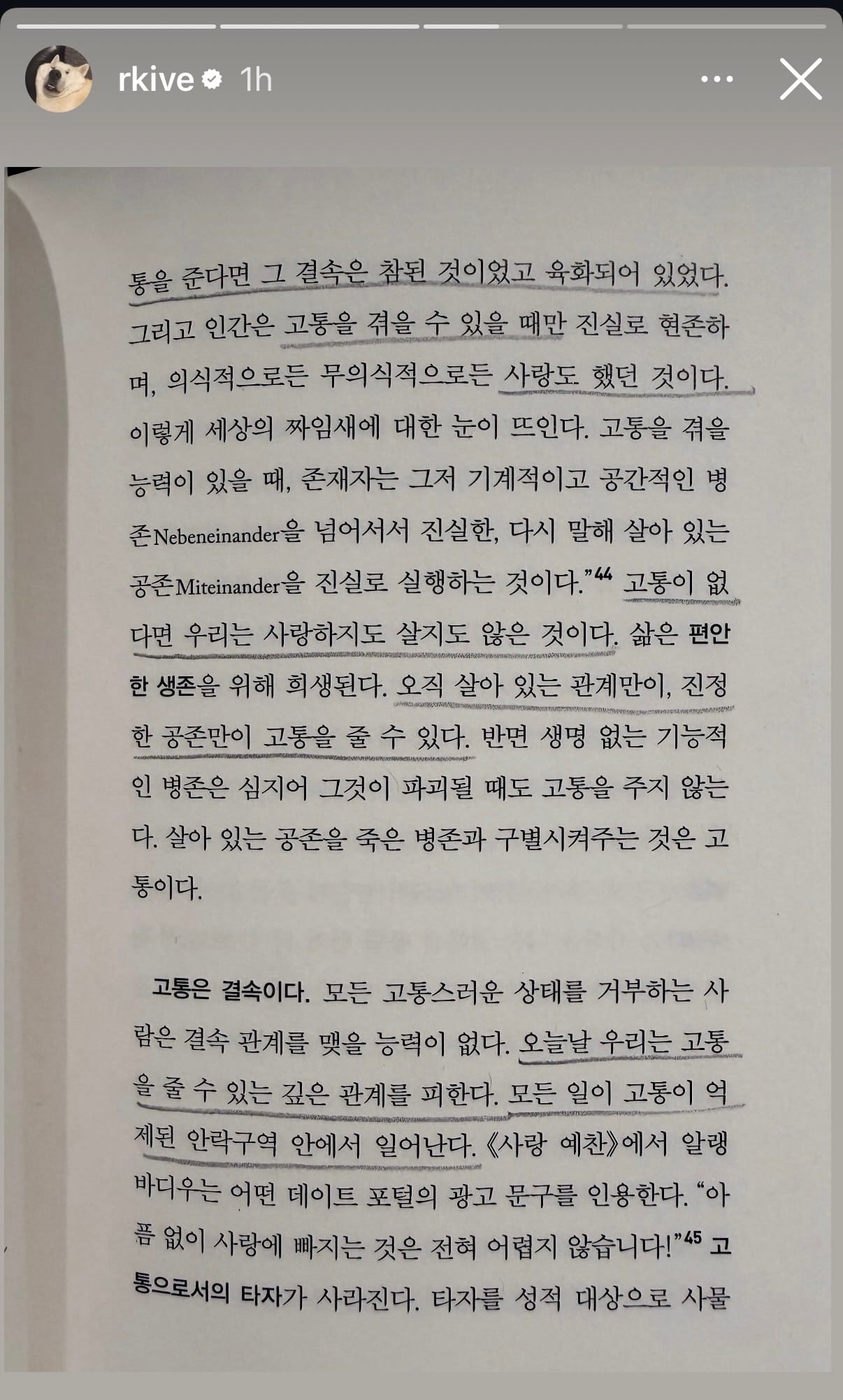
note this is not the very next page
...통을 준다면 그 결속은 차단된 것이었고 육화되어 있었다.
if....causes pain/suffering, that bond has been blocked off/hardened/turned rigid (as if to lose its vitality and become hard)
그리고 인간은 고통을 겪을 수 있을 때만 진실로 현존하며, 의식적으로든 무의식적으로든 사랑도 했던 것이다.
And human beings only truly exist when they are capable of undergoing pain, and it is only then that they can love, consciously or unconsciously.
For any readers that may assert something like "unconscious" only ever refers to being asleep/knocked out - that is actually a misunderstanding!
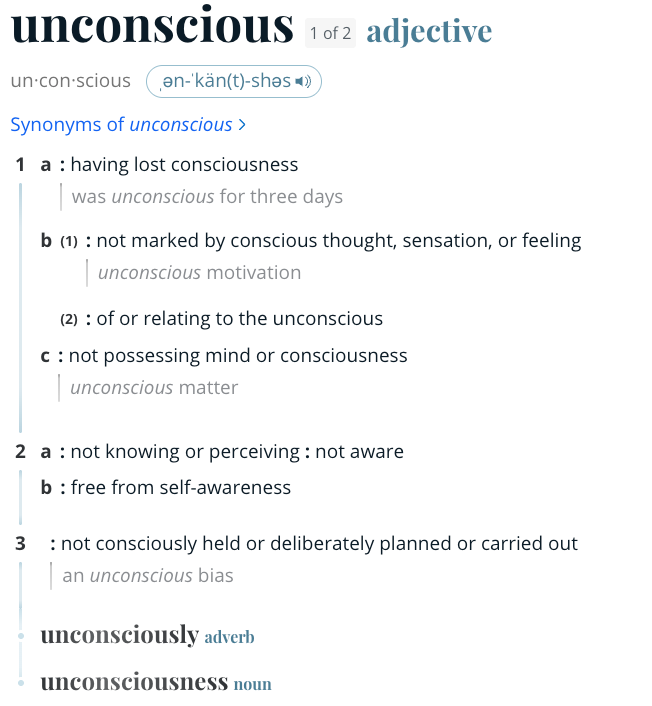
This is referring to the state that means 'not aware'
이렇게 세상의 짜임새에 대한 눈이 뜨인다.
In this way, one's eyes are opened to the structure/fabric of the world.
고통을 겪을 능력이 있을 때, 존재자는 그저 기계적이고 공간적인 병존(Nebeneinander)을 넘어서 진실한, 다시 말해 살아 있는공존(Miteinander)을 진실로 실행하는 것이다.
When one has the ability to undergo pain, a being can move beyond mere mechanical, spatial side-by-side existence (Nebeneinander) and genuinely enact true living coexistence (Miteinander).
고통이 없다면 우리는 사랑하지도 살지도 않은 것이다.
Without pain, we neither love nor live.
삶은 편안한 생존을 위해 희생된다.
Life/vitality is sacrificed for the sake of comfortable survival.
오직 살아 있는 관계만이,진정한 공존만이 고통을 줄 수 있다.
Only within living relationships ("genuine coexistence" as mentioned) can give (yield/produce) pain.
반면 생명 없는 기능적 인 병존은 심지어 그것이 파괴될 때도 고통을 주지 않는다.
In contrast, lifeless, functional side-by-side coexistence does not cause pain, even when it is destroyed.
살아 있는 공존을 죽은 병존과 구별시켜주는 것은 고통이다.
What distinguishes living/dynamic coexistence from dead side-by-side existence is pain.
고통은 결속이다.
Pain is bonding.
모든 고통스러운 상태를 거부하는 사람은 결속 관계를 맺을 능력이 없다.
A person who rejects all painful states has no ability to form bonds.
오늘날 우리는 고통을 줄 수 있는 깊은 관계를 피한다.
Today, we avoid deep relationships that are capable of causing pain.
모든 일이 고통이 억제된 안락 안에서 일어난다.
Everything happens within a comfort zone in which pain has been suppressed/eliminated.
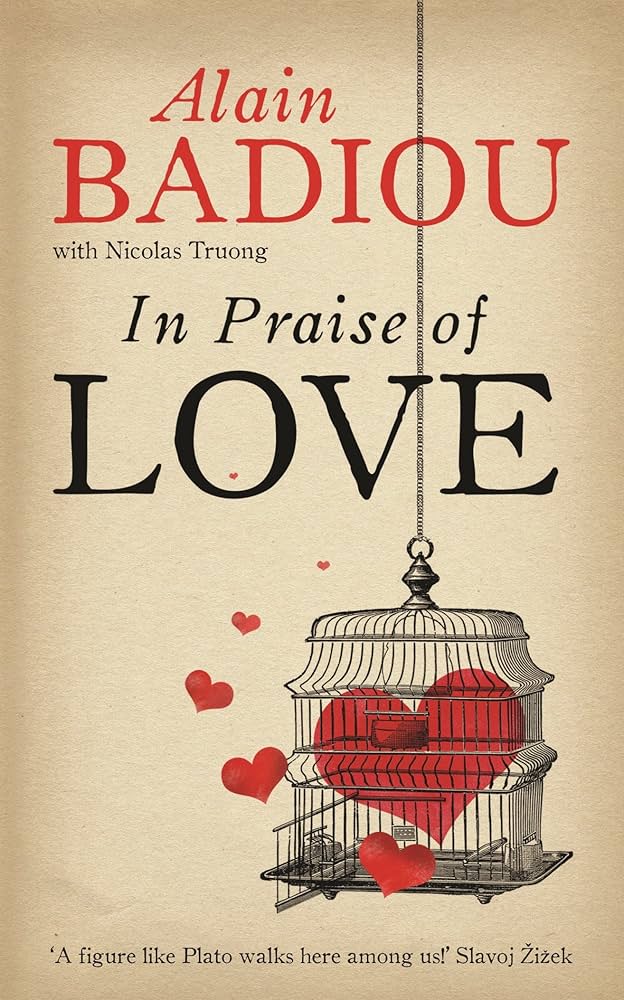
《사랑 예찬》에서 알렝바디우는 어떤 데이트 포털의 광고 문구를 인용한다.
In "In Praise of Love," Alain Badiou cites the advertising slogan of a dating portal.
“아픔 없이 사랑에 빠지는 것은 전혀 어렵지 않습니다!”
"Falling in love without pain is not difficult at all!"
고통으로서의 타자가 사라진다.
The Other in its form as pain (as defined above) disappears.
타자를 성적 대상으로 사물...
The Other is (reduced to) a sexual object...
So please take this with a grain of salt because it is my interpretation but it seems the author is asserting that without the inherent ability to endure/withstand pain for the sake of 'real' relationships/coexistence in a dynamic way that imbues life with its vitality, one may stay safe/comfortable but only in the sense of self-preservation at the cost of 'true' experiences in fullness.
Pain is framed as this sort of gateway through which vulnerability allows important and significant "shudder/goosebumps"-worthy experiences and relationships and art and creation to take root in formative ways.
The whole reason I started translating is because I wanted to read/write/listen to/consume more Korean because my daily, life in the states, does not really require any of it regularly and I felt it starting to rust... I want to be as charming/articulate/funny as I imagine myself to be able to conduct myself in English as in Korean.. and I'm far from it ..BUT!!! as ever, I'm grateful to BTS - namely RM - for opening doors and exposing me to precious unknown realms and making them feel more accessible.
I hope I've helped make this feel a bit more accessible to you all! Thank you for reading!! I'd love to hear your interpretations/thoughts/feels/questions in the comments!