On Being Korean-American
TK's earnest attempt to break down *SOME of the confusion I-ARMY might have about K-ARMY...

I always tense up when I see I-ARMY talk shit about K-ARMY.
I understand that some fan behavior must look absolutely psychotic. Some of it sincerely is just an expression of deep mental illness.
But...re: the cRaZy faNs - I see that in all kinds of fandoms from all different places. I've firsthand witnessed sports fanatics break windows and riot for their sports team losing and winning. Yea - ask me about that if we ever meet in real life - the SWAT team was called. tF??
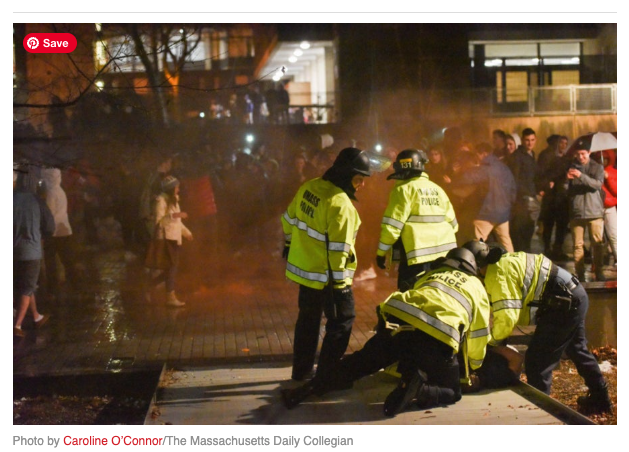
Anyone would observe those instances and recognize them as isolated episodes of asinine groups of people. They likely wouldn't attribute it to "[insert one ethnicity] being shitty." Sure - society, systems, culture, class all contribute to shaping individuals and these elements are definitely tied to ethnic cultures but obviously it's not a causal relationship.
Here's the thing...
Koreans strive for excellence as a country to an extent I've never witnessed in other cultures. And I don't mean this as a brag.
One more time: I DON'T MEAN THAT AS A BRAG.
I mean this is why the song Dis-ease exists. (Read more on j-hope's thoughts re: Dis-ease here)
There's ambition and there's ...fixation?
To say it's a fine line would be generous.. it's a nearly imperceptible line.
Story 1: 0/300
There's this man, Fredrik Haren. Among other things, he goes around speaking to world leaders about the impact of creativity in the workplace.
He gives this talk to leaders from all over the world and starts off by asking 2 important questions (roughly paraphrased as):
- Is creativity important in your job? If yes, raise your hands.
- Do you think you are a creative individual? If so, raise your hand.
He goes over global averages of the answers to these questions.
On average, about 98% of global audiences answer yes to the first question.
On average, about 45% of global audiences answer yes to the second question.
Asians bring down the global average to question 2.
He asks the audience which country they believe scored the lowest for the #2 question...
You guessed it! South Korea.
300 South Koreans
"300 hands go up" -100% of the audience answered "yes" to the first question.
Not one hand went up to the second question. "Out of 300, not a single one."
He asks again to a quiet room - "come on, someone? anyone?"
1 man raises his hand to answer - and offers a clarification - "No. No, not compared to Leonardo DaVinci."
Impossible standards are the standard.
Story 2: Even the Planes Stop Flying
In America, one might reasonably argue that the SAT (Scholastic Aptitude Test) is an important standardized exam for consideration for college admission. Far less now than it used to be when I was growing up - but still relevant for the "top tier" schools.
As such, the most studious high school students may spend a few hours a week preparing for this exam. On the day of the exam, students will likely try their best then head on home. But outside of that student's family and closest inner circle (?), the community at large- the shops - the county - the country - they pay no mind. To expect this wouldn't even make sense.
In Korea, planes stop flying on the day the seniors take the college entrance exam to minimize noise pollution so students can focus. Shops open later to ensure less traffic so students can arrive to the test sites on time. Construction sites pause work. Leading up to this day, younger students rehearse performances to cheer on the seniors. If there's a student running late to the exam, they can flag down a police officer who will escort them to the site via motorcycle/patrol car.

The whole country works together to reduce friction for the students.
Collective flourishing is prioritized over the individual.
Story 3: Sewol Ferry Tragedy
If you're completely unfamiliar, perhaps check this out. In addition to many reasons having to do with the Coast Guard operations and such - one huge contributing factor that resulted in the death of 304/476 people, 250 of whom were young students - is because of hierarchy and obedience. The students were instructed by leaders to "stay put." The students obeyed without question.
Hierarchy serves as the default infrastructure to most relationships - and with it comes specific kinds of deference, responsibility, and accountability.
When j-hope kicked off his tour in Korea, on Day 1, a subset of global ARMY was ENRAGED at the fact that the venue was on the quieter side - not silent - but definitely not in uproarious celebration as was deserving of the illustrious j-hope. No questions. Straight to judgment. "The worst fans" "Korea doesn't deserve him" etc.
I understood the quiet completely. It was the first time he was back on stage since his enlistment. Would he want to speak in between songs? Would it be jarring for others if they came to see j-hope and could only hear my screeching? These are obvious thoughts that temper their behavior. Not lack of enthusiasm or love for j-hope. j-hope knows his people. On the live the night of the first day, he addresses that it was quieter than he expected, he explicitly gives 'permission' to the crowd to be as loud as they wanted the next night. On stage, he additionally invites them to be as loud as they want to be. Day 2 was SUPER loud and dynamic.
I have no qualms with global ARMY being confused. I am disgusted and exhausted by ignorant people centering their foreign/personal POV so confidently that it snuffs out any room for curiosity or room for correction.
So what?
For better and for worse, Koreans prioritize the welfare of the collective over the individual. Korean society is deeply hierarchical. Korean standards are impossibly high. This is expected of regular Koreans.

Regular shmegular Korean standards.
Is this good or fair or healthy? My point is that the answer is complex.
These impossible standards have yielded powerful and innovative products, services, and whole industries on which many global operations depend.
The reason why Korea was able not only to survive but flourish through oppression and economic crisis and beyond was because of this collectivist mindset.
The reason why GLOBAL audiences have fallen in love with the concepts of 'mat hyungs' and 'maknaes' and 'unnies' and 'sunbaes' and 'same-year-liners' is because of this hierarchical tapestry with protection, consideration, and responsibility woven in so sweetly.

HOWEVER, these standards and hierarchical structures are also responsible for Korea being one of the countries with the highest suicide rates in the world.
And again - these standards and systems - undergird every aspect of every REGULAR boring average ordinary Korean.
SO... when there is a celebrity/idol - shown respect, given platform, supported with funding, propped up with connection (regardless of how talented, sincere, amazing, etc. they might be) –when they mess up, it is a big deal - because even the average whatever Korean is held to an impossible standard.
If 'ordinary' Korean individuals are killing themselves to embody 'excellence' with limited means, power, resources, and connections - a celebrity/idol/high-powered leader that behaves carelessly or scandalously feels outrageous. It hurts like a betrayal.
And when you see people saying things like.. "Koreans get drunk all the time and then talk shit about [Insert Celeb] being tipsy?!" - comments like these are exacerbating the problem. Juxtaposing [Insert Celeb] against the 'worst' of society and labeling the whole scene 'Korean.' KOREANS, as a collective, were blemished because people (perhaps sincerely meaning to defend the celeb? perhaps trying to virtue signal?) drew attention to the worst of society when the rest of the country works so hard to be the best. You've confirmed for the 'crazy fans' the exact outcome they expected - [Insert Celeb]'s [mistake/scandal] blemished our reputation.

This complex culture is the one that has forged the people in the lives of the BTS members and the BTS members themselves. They have lived, breathed, and navigated these complexities, witnessing all the beauty and darkness, their whole lives.
Do I (TK specifically) think these expectations are reasonable?
No.
BUT - I acknowledge this is because I grew up in America, not Korea.
AND - it would be insincere of me to say there's no part of me that is proud of the fact that Koreans do aspire to such ridiculous, soul-crushingly high standards that it seems the air they breathe galvanizes them to want to ALWAYS improve and grow.
A part of me secretly really loves that- but, CRITICALLY, I'm aware of the consequences of allowing that part [of me] to grow unchecked/out of control.
Unchecked- a passionate, purpose-driven ambition can quickly warp into an all-consuming fixation requiring me to tread the waters of productivity to earn my next breath. I know I don't want this because I worked hard to move past this version of existence. Therapy, prayer, community, standup comedy, BTS, baking, illustrating, piano, running, and translating have all helped me to crawl out of and stay away from this cultural quicksand.

But growing up in America meant that just outside my home, I was immersed in a culture that prioritized the self, that centered the comfort and preference of the individual, that encouraged you to demand and fight for others to make efforts to meet you halfway or where you stood. This afforded me enough distance that, at the very least, I was confused by the Korean ways - so I had space to question parts of it.
I mean, I still grew up under Korean parents - so a solid ~60-70% of my heart abided these systems by default and I had to calibrate, every few steps, what is good - what is true - what is healthy - what is worth preserving versus what has just gone unchallenged 'in the name of tradition' without critical review?
From my Korean-American POV, it seems many Korea-based Koreans understand peoples' worth to be fundamentally and directly tied to their performance/output without question. It's the air they breathe. They evolve within it. They find ways to survive it.
Of course, the ones that are able/do find space to think critically about their inherent worth vs. their output vs. their purpose - these Koreans are challenging systems, wrestling to stop generational traumas, and pioneering new ways to hold purpose, duty, and dignity together - gently and thoughtfully.
I am a firm believer that aspiration, even truly lovely ones, without wisdom (and critically, wise community) is a recipe for certain destruction.
I believe that the members of BTS have forged their own path and fall in the latter category of Koreans, born into the beauty and darkness of the culture, but finding their own path forward - thoughtfully carrying Korean culture into their future - each with six other bingbongs to help calibrate along the way. I imagine that's what ARIRANG will unpack.
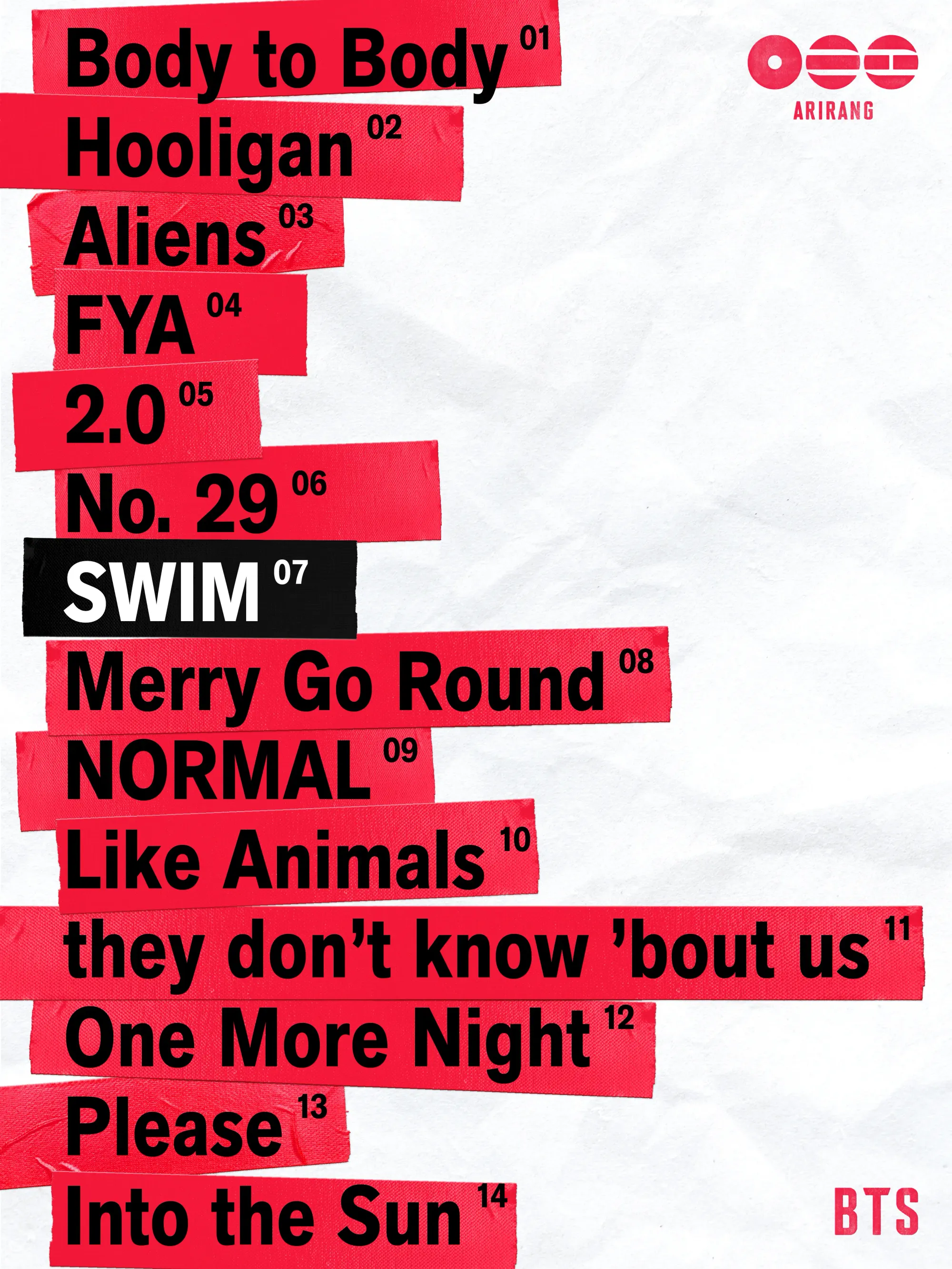
All this to say, the next time you listen to Fire, Haegeum, Mic Drop, So What, etc. - BTS songs of defiance, of vulnerability, of resilience - against the backdrop of Korean culture - remember it is a bold and striking piece of art truly worth savoring~
And the next time you see a well-intentioned but ignorant kpop fan jumping to flatten Korean social issues into a simple 'they don't deserve BTS/whoever' - maybe share this?
Anyway, SPRING DAY & MIC DROP translations coming next... stay tuned!

-TK